Wednesday, 25 January 2017

Big Garden Birdwatch 28th-30th January

Image result for big garden birdwatch


The Big Garden Birdwatch, organised by the RSPB (Royal Society for Protection of Birds) are organising the annual Big Garden Birdwatch for 2017. They have been arranging these since 1979 when it was just done by junior members, and in 2016 more than 519,000 people all over the UK counted 8,262,662 birds!


The 2017 count is the first one to go into three days, from January 28th (Saturday) to Monday January 30th.


It is not too late to be a member of this vital count that tells the RSPB about the decline (or hopefully the increase) in the number of birds on these shores, and monitor their trends.


It is not too late to register and download the pack. Visit https://ww2.rspb.org.uk/get-involved/activities/birdwatch/ to get involved. You even get £5 off your next RSPB shop order and free delivery if you register before 30th January.


Tuesday, 24 January 2017

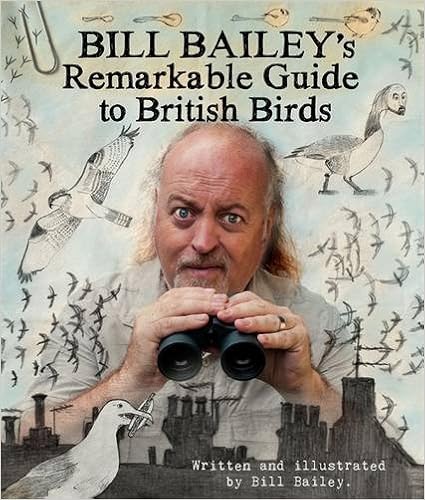
Bill Bailey's Remarkable Guide to British Birds


Book reviews on this blog are akin London buses, there are none and then there are two (although you would not normally wait two months for a bus!).

Bill Bailey is a famous comedian, and one of Britain's most famous "twitchers". His book on the most commonly seen, and some of the less seen birds of the UK (his favourite 51) is one that he has written and illustrated himself in a personal and comedic manner. He has made all notes, illustrations and cartoons himself, and includes interesting facts about all species he features, such as, "It is said that gulls are the spirit of old fishermen. Old fisherman who liked nicking chips", and on voles, a staple diet of the kestrel, "voles are the all-purpose snack, the buttered toast of British wildlife" (best read with his West Country accent in mind).

He is passionate about the subject, and his passion shows through in all the sections of the book, not just the more exotic species (such as the red-throated diver) but even the common species such as the house sparrow, and as with everything he does, his passion is infectious.

However, Bill does not tell you that the scientific name of the house sparrow is Passer domesticus. He also does not explain that the UK bird population is in rapid decline, and have been since 1980. This is specifically poignant with regards to farmland birds, such as the grey partridge. He also does not explain how this can be fixed (not that you would expect him to in a light-hearted book such as this).

These are things that can be learned through study. Education is intrinsic in helping to remedy the decline of UK bird populations, and in turn to create a more sustainable planet for the species to thrive on. To be part of the solution, please feel free to come along to the Moulton College Open Day on Saturday February 4th between 08:00 and 12:00. Alternatively, you can email us at enquires@moulton.ac.uk, or telephone us on 01604 491131. We look forward to seeing you!

Friday, 13 January 2017

Countryside Management Action!

So here are some links to some activities our HE students have been up to - take a look! First up are some fine hedgelaying skills at Rutland Water.......


Secondly, we have some fisheries work at Corby Boating Lakes with Andy Beal!


Tuesday, 22 November 2016

Countryside Bloggers: A New Hope!

Well with a new Star Wars film in the offing this Xmas, I am at this juncture reminded of the following quote from the 1977 original classic:

Darth Vadar: 'I’ve been waiting for you, Obi-Wan. We meet again, at last. The circle is now complete. When I left you, I was but the learner; now I am the master'.


So with this in mind the occasional Moulton staff member will still contribute to the blog, but it will also harness the talents of a new generation - students across several years of our FdSc Countryside & Wildlife Management and BSc Land Management programmes! The first post of which is by Sam (see below).

Nice!


Saturday, 19 November 2016

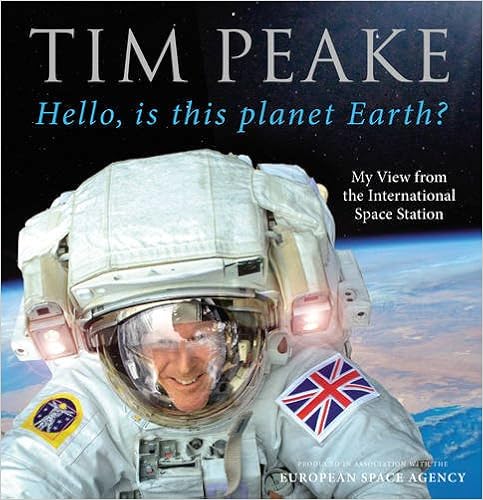
Hello, is this planet Earth?


I'm not aware of a book review being done on this blog before, and even if there has been, I'm sure it would have related to countryside. But this one I felt I had to review.  The book is by Tim Peake, Britain's first "official" astronaut. Normally you would expect this type of book to be full of the same type of stories as other similar books, stories of the riguors of flight training, the strict diet that he had to maintain for years previously, etc. But this book is full of photos, and not of the NASA training centre. It is mainly of Earth, and, in my opinion, really shows what we have, and why we must fight as hard as we can to preserve it.

From a distance you realise the beauty of this planet and what it gives us, along with the varying terrain and the glorious oceans. As Tim Peake himself writes in the book;

"It's impossible to look down on Earth from space and not be mesmerised by the fragile beauty of our planet.'

I may have been 400km up, but I have never felt closer to Earth than when I was on board the International Space Station. 

I'm delighted to share with you this collection of photographs with some of my thoughts from my mission. Although I briefly left the santuary of our planet, I rediscovered the wonder of the place we call home".

I urge you to go out and buy this book, whether you are involved in a course looking at countryside management, are considering a new course or are having doubts about a career choice. Because the beauty of this planet really makes you want to try as hard as you can to preserve it, manage it, and make it a better place for every organism on it. For those of you inspired to try and make a difference, remember Moulton College has an open day on Thursday 1st December, between 17:00 and 19:00, and you can register on the day for a course that inspires you.


Tim Peake's proceeds for this book go to The Princes Trust.

Wednesday, 14 September 2016

Nature Appears to be in a State

Well that's all a bit depressing, but with the publication of the annual State of Nature Report 2016 it seems British wildlife is still in trouble. It seems the authors are quick to point the finger at the custodians of the British countryside - our farmers, but the real reasons for reported declines may well be far more complex.

Sir David Attenborough launches the RSPB authored report today and using modern Red List criteria, which identify species of the highest conservation concern, 8,000 species were assessed. Of these, 15% are reported as being 'extinct' or 'threatened with extinction' from Great Britain.Turtle doves and hedgehogs are reported to be in serious decline, but it's not all bad news. Indeed some species including otters and red kites are on the rise.

Our courses provide a platform to train conservationists in methods to best halt these declines - why not get in touch today?!

Water vole print found by a Moulton student along the River Ise last year


Monday, 5 September 2016

Moulton College Research features in prestigious British Wildlife Photography Awards 2016!

After the publication of a rather striking image last month in the National Geographic taken by photographer Nick Upton from our ongoing research project on the conservation of British mammals, the College was pleased to hear that more of Nick’s pictures have resulted in him claiming top prize in the hard fought ‘best documentary series’ category. 

You can view the gallery of images here and you will note that Moulton's own PhD researcher Emily Howard-Williams and her faithful sidekick ‘Tui the dog’ play a prominent role!

Nick will receive his award – won over thousands of other entries - at the famous Mall Gallery in central London tonight where all of the images can be viewed by the public from September 6th – 10th. The work is already proving popular with the public and press alike, with the likes of The Guardian featuring it today. Great news all round!